October 10, 2026
How to Choose the Right Size Commercial Water Heater
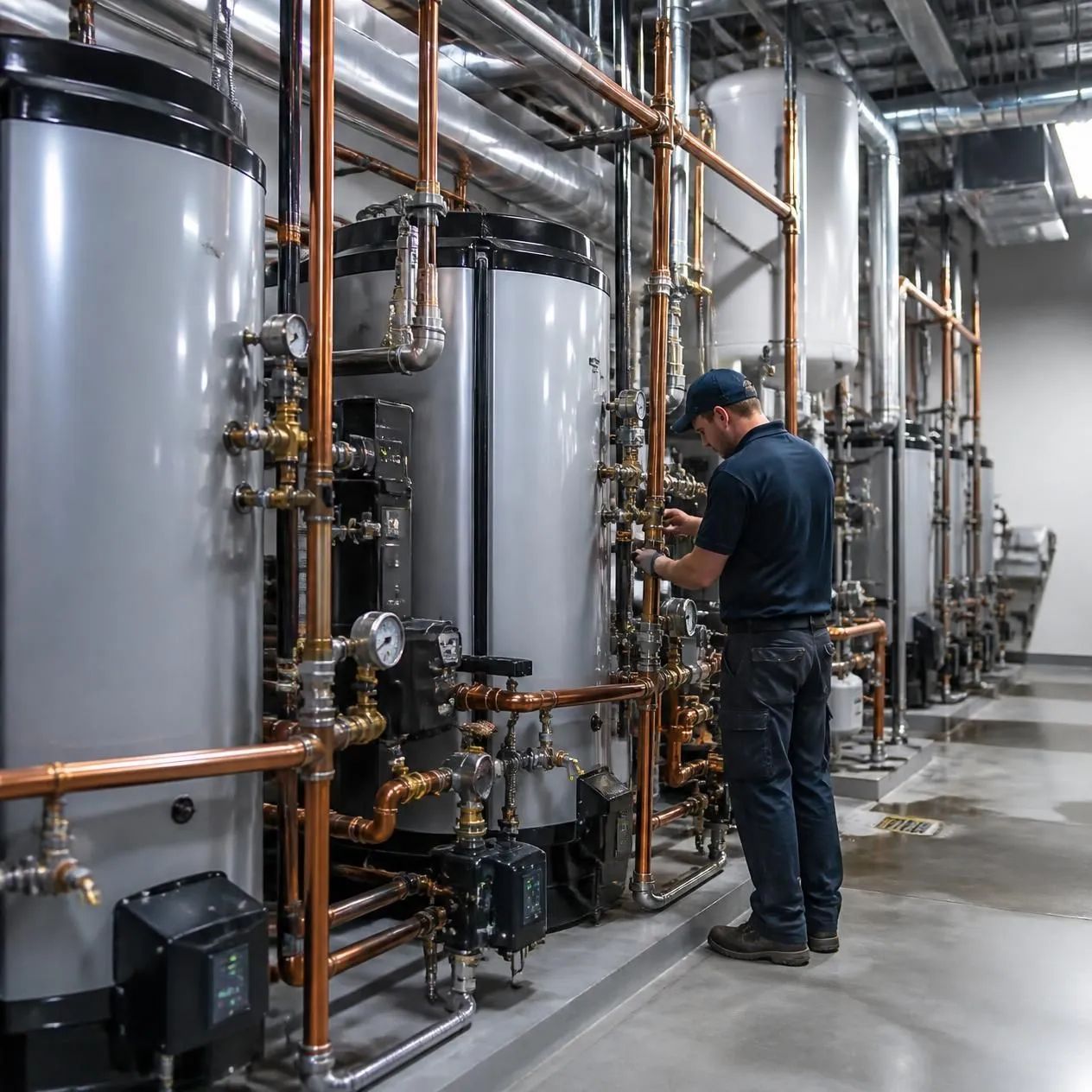
To choose the right size commercial water heater, work from your busiest hour, not your average day. List every fixture and appliance that draws hot water, estimate how many run at the same time, and note how much the incoming water must be heated. Then match a tank size and a recovery rate, or a tankless flow rate, to that peak. Pick a unit with a little room above the number, leave space for the business to grow, and confirm that the fuel, venting, and floor space can actually support the heater you choose.
A heater that is too small fails in public. The line at the dish station backs up, the locker room goes cold in the middle of the evening rush, and the staff learns to ration showers. A heater that is too large fails quietly. It sits in the mechanical room, keeping a tank of water hot for people who are not there.
Both mistakes begin in the same place: someone picked a number before they understood the building. This guide walks through the order of the decisions, so the number you land on comes from how your property really uses hot water.
Step One: Find Your Busiest Hour
Hot water demand in a commercial building is never flat. It comes in waves. A restaurant peaks at lunch and dinner. A gym peaks early morning and after work. A medical office peaks in the first two hours after it opens, when every exam room starts running water at once.
Size for the wave, not for the calm. The heater has to cover the busiest sixty minutes you can reasonably expect, because that is the hour when a shortfall shows up in front of customers.
Walk the Building With a Clipboard
Count every hot water fixture and appliance, recording quantities and usage times, including sinks, dishwashers, showers, and laundry.
Ask the People Who Work There
Consult managers and maintenance staff about peak demand, recurring cold water issues, and usage patterns that square footage cannot reveal.
Step Two: Estimate How Much Runs at Once
Not every fixture runs at the same time. In a hotel, only a modest share of the fixtures are open at any given moment. In a kitchen on a Saturday night, nearly everything is. That share is called a demand factor, and it is the difference between a sensible estimate and a wild overestimate.
Engineering references list typical peak hour hot water use for each fixture type, grouped by building type. You add up the fixtures, apply a demand factor, and arrive at a maximum demand figure in gallons per hour. Some of that data comes from decades ago, before low flow fixtures became common, so the raw numbers can run on the high side for a modern fit out. A sizing review should account for the fixtures you actually have, not the ones in an old table.
Tip: Write down your fixture list and your three busiest windows before you talk to anyone about a replacement. A clear list of what runs and when shortens the sizing conversation and makes the recommendation easier to check against how your building behaves.
Step Three: Set the Temperature Rise
Hot water demand is only half the picture. The other half is how much work the heater has to do to the water it receives.
The temperature rise is the gap between the temperature of the water coming in and the temperature you need at the tap or at the appliance. In Greater Boston, incoming water is noticeably colder in January than in August, so the same heater has to work harder in winter. A unit sized only for a warm month can slip behind in the cold months, exactly when the building is busiest.
Some equipment sets the target higher than the rest of the building. Commercial dishwashers and sanitizing equipment often need hotter water than a hand sink does, which can call for a separate booster heater rather than raising the temperature of the entire system. It is worth deciding that early, because it changes how many heaters the building needs.
Step Four: Match Storage to Recovery
For a tank style heater, two numbers do the work together.
Storage Capacity
Storage capacity measures the tank’s hot water volume, covering initial demand surges when multiple fixtures operate simultaneously during busy periods.
Recovery Rate
Recovery rate measures gallons reheated hourly during continued demand. Gas burners typically recover faster than similarly sized electric elements.
The two trade off against each other. A large tank with slow recovery can handle a short, sharp spike and then struggle through a long one. A small tank with fast recovery handles steady demand well but can run short in a sudden surge. The right pairing depends on the shape of your peak. A short, intense rush favors more storage. A long, steady stretch favors faster recovery.
Manufacturers publish a first hour rating, which blends the two. It reflects the hot water the heater can deliver in its first hour of heavy use, and it is usually somewhere near ninety to ninety five percent of the tank volume plus one hour of recovery. Compare that figure to your peak hour demand, and choose a heater that sits comfortably above it.
Step Five: Decide Between a Tank and Tankless
A tank system stores heated water and draws on it as needed. A tankless system heats water as it flows, so its limit is flow rate, measured in gallons per minute, at a given temperature rise.
Tankless fits well where demand is steady, space is tight, or you want to add capacity by adding units. Tank systems fit well where demand comes in sharp bursts and the mechanical room has the floor space. Neither is better in the abstract. The question is which one matches the shape of your peak.
A tankless unit sized by the number of fixtures alone can mislead you. It has to be sized by how many fixtures realistically run together, and by the temperature rise in the coldest month. Undersize a tankless system for the winter and it will deliver warm water at best, no matter how new it is.
Step Six: Plan for More Than One Heater
One large heater is simple, but it is also a single point of failure. If it goes down on a Friday, the whole building loses hot water.
Many commercial properties are better served by two or more smaller units working together. If one is down for service, the others keep the building running at reduced capacity. That arrangement also lets you add capacity later by adding a unit, rather than replacing the whole system. For restaurants, gyms, and multi tenant buildings where hot water is part of daily operations, that resilience is often worth planning in from the start.
Warning: Sizing a heater to your needs today without room to grow is a common mistake. A restaurant that adds seating, a gym that adds a pool, or a landlord who adds a tenant can push demand past what the heater was chosen to carry. Ask what the next three to five years of the building look like before the number is final.
Step Seven: Check What the Building Can Support
A correctly sized heater still has to fit the place where it will live. Before you commit, confirm a few practical things.
Fuel and Supply
Confirm gas line capacity or electrical service can support the selected heater's full operating requirements without overloading existing systems.
Venting
Gas heaters require correctly sized, safe venting. Available vent routes and installation constraints can determine which heater suits the building.
Space and Access
Check ceiling height, floor space, and service clearances so technicians can safely access controls, anode rods, and drains.
Water Quality
Hard water causes mineral scale, reducing recovery and heater lifespan. Consider treatment systems or regular flushing when planning installation.
Common Sizing Mistakes to Avoid
Sizing for the Average Day
Average demand hides peak usage, when simultaneous hot water needs can overwhelm capacity and trigger customer complaints.
Copying the Old Heater
Reusing old heater sizing ignores changes in equipment, staffing, operating hours, and current building demands.
Ignoring Winter
Winter's colder incoming water requires greater temperature increases, potentially leaving an undersized heater unable to meet demand.
Skipping User Conversations
Ask managers and staff about recurring hot water complaints to understand actual demand patterns before selecting equipment.
Frequently Asked Questions
What is the single most important number when sizing a commercial water heater?
Your peak hour demand. It tells you how much hot water the building needs in its busiest sixty minutes, and every other choice builds from it.
What is a first hour rating?
It is a published figure that estimates how much hot water a tank heater can deliver in its first hour of heavy use. It combines the stored volume with the heater's recovery during that hour.
Does a bigger tank always mean more hot water?
Not necessarily. A large tank with slow recovery can run out during a long rush. What matters is how storage and recovery work together against your demand pattern.
Should I size for winter or summer?
Winter. Incoming water is colder, so the heater has to add more heat, and a unit that is comfortable in summer can fall behind in the coldest months.
When does a building need more than one water heater?
When hot water is essential to daily operation, when demand is high, or when different equipment needs different temperatures. Multiple units also keep the building running if one has to be serviced.
Can I size a heater myself using a fixture count?
A fixture count is a good starting point, but it takes a demand factor, a temperature rise, and a review of how your building actually runs to turn it into a reliable size. A site visit usually settles it faster.
Sizing a Water Heater Around Your Real Demand
The right commercial water heater begins with an honest picture of how the building uses hot water. Your busiest hour, the fixtures that run together, and the temperature rise in the coldest month shape every other decision. Storage and recovery then have to match the shape of that peak, whether it arrives as a short burst or a long, steady stretch. Leave a little room above the number, and the heater will carry the building through its hardest hours without drawing attention to itself.
A good size also has to fit the property around it, from fuel supply and venting to floor space and water quality. Valante Mechanical Inc.
has spent 45
years sizing and installing heaters in Quincy, MA, and that history has shown that the best results come from planning for growth and from using more than one unit where hot water is essential. Choose the equipment for the building you will have in five years, and the system will keep serving it well.