August 30, 2026
10 Signs Your Commercial Plumbing System Needs Professional Repair
The maintenance request sits in your inbox for three days because nothing looks urgent. A little less water pressure in the second-floor restroom. A faint smell near the break room sink that comes and goes. A water bill that crept up again this quarter, same as last quarter. None of it stops the business from running, so it waits. Then a pipe fails on a Friday afternoon, the water shuts off building-wide, and every one of those small signs turns out to have been the warning the whole time.
Commercial plumbing systems rarely fail without notice. They fail after a string of smaller signals that got written off as minor inconveniences. Knowing what those signals actually mean is the difference between a scheduled repair and an emergency call.
Quick Answer: A commercial plumbing system typically shows several warning signs before a major failure: rising water bills with no clear cause, dropping water pressure, slow drains throughout the building rather than at a single fixture, lukewarm or noisy water heaters, discolored water, sewer odors, recurring clogs in the same line, corroded or damp pipes, fixtures that run constantly, and banging or rattling sounds in the walls. Any one of these on its own is worth a look. Two or three together usually means the system is already past the point where waiting helps.
The Water Bill and Pressure Signs That Something's Wrong
A Water Bill That Keeps Climbing With No Operational Explanation
Commercial water use tends to follow a rhythm tied to occupancy, hours, or covers served. When usage climbs steadily month over month with nothing on the business side to account for it, a hidden leak is the most common cause. Slab-run pipes, buried supply lines, and wall cavities can leak for weeks before any sign reaches a surface anyone would notice, which means the bill is often the first honest warning a property gets.
Water Pressure Dropping Across More Than One Fixture
A single sluggish faucet might just need a new aerator. Pressure loss across multiple fixtures on different floors or in different parts of the building points to something upstream: a developing leak, mineral buildup narrowing the pipe from the inside, or a failing pressure-reducing valve. The wider the pressure drop spreads, the more it signals a system-level problem instead of a fixture-level one.
Drain and Sewer Warning Signs You Shouldn't Wait On
Drains Running Slow Throughout the Building, Not Just at One Sink
One slow drain is usually a local clog. Slow drainage at multiple fixtures at the same time, especially on the lowest floor of the building, points toward a blockage or a developing problem in the main line everything else feeds into. That's a different repair entirely, and it tends to get worse fast if it's ignored.
A Sewer Odor That Shows Up Inside the Building
Properly working drain systems use water-filled traps and vented lines specifically to keep sewer gas out of occupied space. A persistent sewer smell, especially one that isn't tied to a specific event, usually means a trap has dried out, a vent is blocked, or a line has developed a crack somewhere it shouldn't. It's rarely something that resolves on its own.
The Same Drain Clogging Again and Again
A drain that clears with a plunger and then clogs again within days or weeks isn't a clog problem anymore. It's usually a sign of a partial blockage further down the line, grease buildup that's narrowing the pipe over time, or a section of pipe that's developed a low spot where debris keeps collecting. Clearing the symptom repeatedly without addressing the cause just delays a bigger backup.
Tip: Keep a simple log of which drains slow down or back up and when. A pattern across the same line, especially one that lines up with kitchen or high-traffic hours, tells a plumber exactly where to start looking instead of diagnosing the whole system from scratch.
Water Heater and Fixture Signs of a Failing System
Water Running Lukewarm Instead of Hot
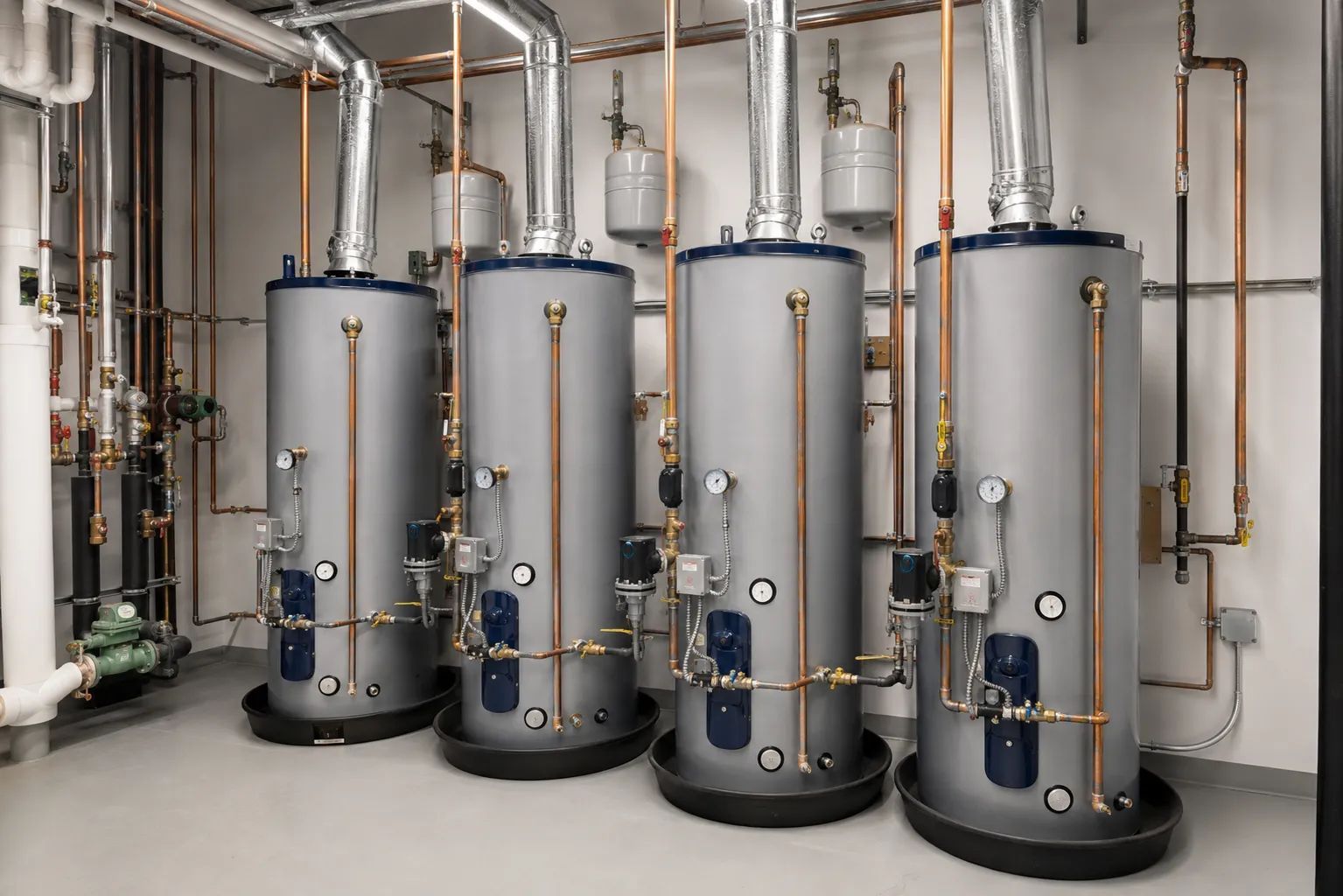
A commercial water heater that can't reach or hold temperature is usually dealing with one of a few specific problems: sediment buildup insulating the heating element from the water, a failing thermostat, or a unit that's simply undersized for current demand. None of these get better by waiting, and a unit working harder than it should to compensate tends to fail sooner rather than later.
A Water Heater Making Noise It Didn't Make Before
Rumbling, popping, or knocking from a water heater almost always means sediment has built up on the bottom of the tank. Water trapped under that layer boils and pushes through it, which is where the sound comes from. It's not just noise. Sediment buildup reduces efficiency and accelerates wear on the tank itself.
Toilets or Fixtures That Run Constantly
A toilet that keeps running after the tank fills, or a faucet that never fully shuts off, wastes water continuously and puts ongoing strain on the valve or fixture involved. In a building with dozens of fixtures, a few running constantly adds up fast, both in water use and in the wear it puts on the supply lines feeding them.
The Physical Signs Hiding in Your Pipes
Discolored Water Coming Out of the Tap
Brown, yellow, or rust-tinted water usually points to corrosion somewhere in the supply piping, often in older galvanized steel lines that have been in service for decades. Corrosion inside a pipe doesn't stay contained to the water passing through it. It thins the pipe wall from the inside, and a pipe that's corroding is a pipe getting closer to a failure point.
Warning: Discolored water paired with a drop in pressure at the same fixture is a stronger signal than either sign alone. That combination often means a pipe is corroded enough that it's both restricting flow and shedding material into the water, and it's worth having checked before it fails outright rather than after.
Banging, Rattling, or Gurgling Sounds in the Walls
A sharp bang when a fixture shuts off is water hammer, caused by water suddenly stopping and slamming against a closed valve. Left alone, it stresses pipe joints and fittings over time. Gurgling from a drain when a different fixture runs points to a venting problem in the drain system, where air isn't able to move the way the system was designed for. Neither sound is just an annoyance. Both are the system telling you something about how it's actually performing.
Why These Signs Add Up Faster Than They Seem
None of these ten signs happen in isolation for long. A slow drain feeds into a sewer odor. A corroded pipe feeds into discolored water and a pressure drop. A struggling water heater keeps running harder until the sediment problem becomes a heating element problem becomes a full unit failure. The signs compound, and the building usually gives a fair amount of warning before something fails outright. The businesses that catch it early are the ones paying attention to more than one sign at a time instead of treating each one as a separate, unrelated inconvenience.
Frequently Asked Questions
How many of these signs need to show up before it's worth calling a plumber?
One clear sign is reason enough for a look, especially a water bill increase, a sewer odor, or discolored water, since those rarely resolve without intervention. Two or more signs showing up close together is a stronger signal that the issue is more than a single fixture problem.
Can a business keep operating while these issues get diagnosed?
In most cases, yes. A proper diagnostic doesn't require shutting the whole building down, and identifying the source of a problem usually takes far less time than most property managers expect. The goal of catching these signs early is exactly to avoid the kind of failure that does force a shutdown.
Is a noisy water heater always about to fail?
Not immediately, but the noise is a real signal that sediment has built up and the unit is working harder than it should. Addressing it early, before performance drops further, usually costs less in downtime and disruption than waiting until the unit stops heating altogether.
What's the difference between a normal aging system and one that actually needs repair?
Age alone isn't the deciding factor. A well-maintained older system can outperform a newer one that's been neglected. The signs in this list, rather than the system's age, are the more reliable indicator of whether something needs professional attention now.
Should discolored water always be treated as an emergency?
Not always an emergency, but never something to ignore. A single instance after work on nearby pipes might just be sediment stirred up temporarily. Recurring discoloration, especially paired with a pressure change, points to ongoing corrosion and is worth a professional look soon.
Catch Plumbing Problems Before They Disrupt Operations
Commercial plumbing problems are easier to manage when warning signs are recognized before they develop into larger failures. Changes in water pressure, recurring clogs, unusual noises, sewer odors, discolored water, and unexplained increases in usage can reveal problems developing behind walls or beneath floors. For commercial properties in Quincy, MA, paying attention to these patterns helps separate routine fixture issues from broader system concerns that could eventually affect daily operations, building conditions, water efficiency, and overall plumbing reliability.
With 45
years of experience, Valante Mechanical Inc.
understands how several seemingly minor plumbing symptoms can connect to one underlying system problem. A slow drain, pressure change, or noisy water heater may appear manageable alone, but recurring or overlapping signs deserve closer attention. Recognizing those connections allows
commercial plumbing systems
to be maintained more predictably and reduces the likelihood of unexpected interruptions. In the end, consistent observation and timely professional repair help keep essential plumbing infrastructure dependable as buildings and demands change.